
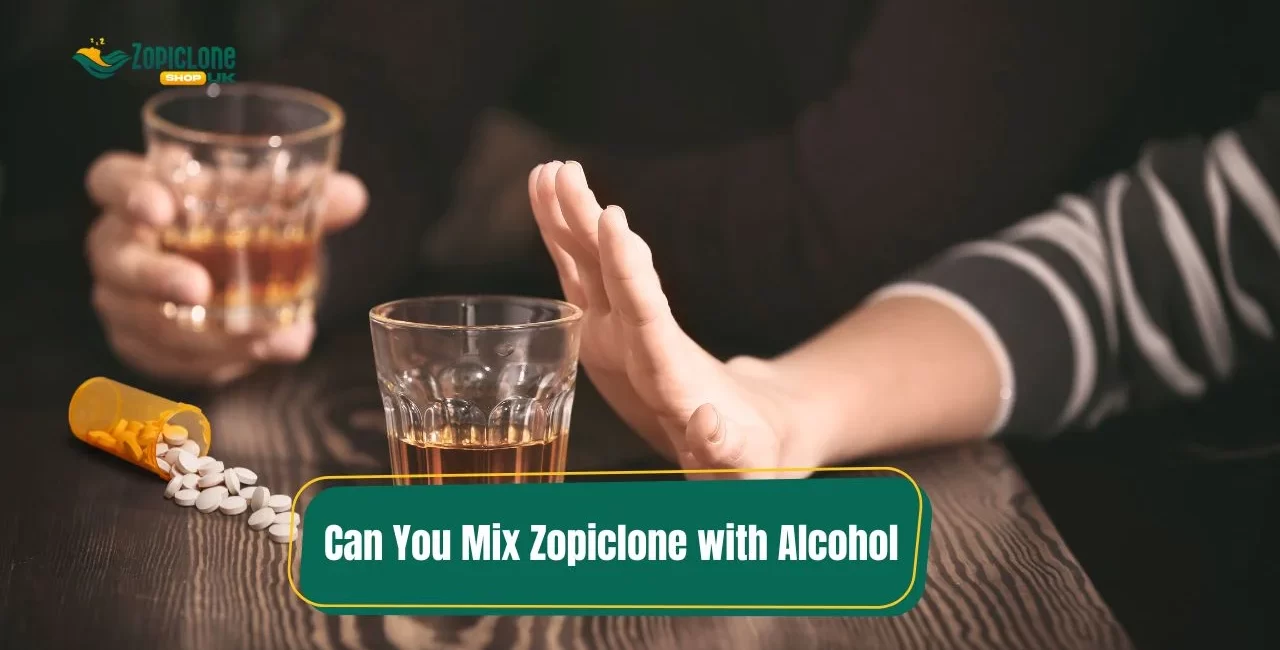
If you’re using Zopiclone to manage sleep problems, you’re likely wondering what substances you should avoid while taking it. One of the most frequently asked questions is whether it’s safe to combine Zopiclone and alcohol or take it alongside other medications. Understanding how Zopiclone interacts with alcohol and other drugs is crucial for your safety, sleep quality, and overall health.
In this guide, we’ll break down how Zopiclone works, why combining it with alcohol or other drugs can be dangerous, and how to use it safely.
Contents
- 1 What Is Zopiclone?
- 2 Zopiclone and Alcohol: A Risky Combination
- 3 Zopiclone Drug Interactions: What Else Should You Avoid?
- 4 Safe Medication Use: How to Protect Yourself
- 5 Signs of Dangerous Interactions: When to Seek Help
- 6 Conclusion: Don’t Mix Zopiclone and Alcohol – Play It Safe
- 7 🔗 Further Reading & Resources
- 8 Frequently Asked Questions (FAQ)
What Is Zopiclone?
Zopiclone is a non-benzodiazepine hypnotic prescribed for short-term treatment of insomnia. It works by enhancing the effects of gamma-aminobutyric acid (GABA), a calming neurotransmitter in the brain. This action helps reduce overactivity in the nervous system and promotes faster sleep onset and better sleep maintenance.
Usually prescribed in 7.5mg or 10mg doses, Zopiclone is intended for nighttime use under short-term supervision.
Zopiclone and Alcohol: A Risky Combination
Mixing Zopiclone with alcohol is strongly discouraged by medical professionals—and for good reason.
🚫 1. Both Depress the Central Nervous System (CNS)
Zopiclone and alcohol are both CNS depressants, which means they slow brain activity. When taken together, they can excessively amplify each other’s effects, leading to:
- Extreme drowsiness
- Confusion or blackouts
- Slowed breathing
- Risk of coma or death (in high doses)
⚠️ 2. Impaired Judgment and Coordination
Combining Zopiclone and alcohol may impair your motor skills, making it dangerous to drive, operate machinery, or even walk safely.
😴 3. Poor Quality Sleep
While Zopiclone helps initiate sleep, alcohol disrupts REM sleep. Mixing the two may result in fragmented sleep, next-day grogginess, and reduced cognitive function.
Also Read: Is Zopiclone a Controlled Drug? Everything You Should Know
Zopiclone Drug Interactions: What Else Should You Avoid?
Zopiclone can interact with several other medications, many of which you might be taking for unrelated conditions. Here are some key categories and examples:
🔹 1. Other Sedatives or Sleep Aids
Avoid taking Zopiclone alongside other medications designed to induce sleep or calm the nervous system, such as:
- Benzodiazepines (e.g., diazepam, lorazepam)
- Antihistamines with sedating effects (e.g., diphenhydramine)
- Barbiturates
- Over-the-counter sleep aids
Risk: Excessive sedation, respiratory depression, risk of overdose.
🔹 2. Antidepressants and Antipsychotics
Some antidepressants and antipsychotics increase the sedative effects of Zopiclone, including:
- Amitriptyline
- Mirtazapine
- Quetiapine
- Trazodone
Risk: Intensified drowsiness, confusion, reduced alertness.
🔹 3. Opioid Painkillers
Mixing Zopiclone with opioids like morphine, codeine, or oxycodone can be life-threatening.
Risk: Respiratory suppression, unconsciousness, coma, or death.
🔹 4. Anti-Seizure Medications
Medications like gabapentin or pregabalin also depress the CNS and increase Zopiclone’s sedative effects.
Risk: Cognitive dulling, excessive sleepiness, risk of falls and accidents.
🔹 5. Alcohol-Containing Medicines
Many cough syrups and liquid formulations contain alcohol. Always check the label before combining with Zopiclone.
Safe Medication Use: How to Protect Yourself
If you’re prescribed Zopiclone, follow these safe usage tips to avoid dangerous drug interactions:
✅ 1. Be Honest With Your Doctor
Always tell your doctor about all medications you’re currently taking—including over-the-counter pills, supplements, and herbal products.
✅ 2. Avoid Alcohol Entirely
Even small amounts of alcohol can dangerously amplify Zopiclone’s effects. Abstain from alcohol while using this medication.
✅ 3. Do Not Mix with Other Sleep Aids
Don’t “double up” with other sleep-inducing drugs. Stick to your prescribed dose and don’t self-medicate.
✅ 4. Stick to the Recommended Dose
Taking more than prescribed increases your risk of side effects, dependency, and overdose—especially when combined with other CNS depressants.
✅ 5. Ask Before Adding Any New Medication
Consult your doctor before starting any new medication while on Zopiclone.
Signs of Dangerous Interactions: When to Seek Help
Call emergency services or see a doctor immediately if you experience:
- Shallow or slowed breathing
- Severe confusion or hallucinations
- Blue lips or fingertips
- Loss of consciousness
- Chest pain or irregular heartbeat
Conclusion: Don’t Mix Zopiclone and Alcohol – Play It Safe
To sum up, mixing Zopiclone with alcohol or other sedative medications is never safe. The risk of respiratory suppression, overdose, or death increases significantly when these substances are combined.
Always prioritize safe medication use, disclose all drugs and supplements you’re taking to your doctor, and avoid alcohol while on Zopiclone.
🔗 Further Reading & Resources
Frequently Asked Questions (FAQ)
No. Combining Zopiclone and alcohol is unsafe. Both depress the central nervous system and can lead to serious side effects like slowed breathing, unconsciousness, or even death.
Avoid other sedatives, antidepressants, opioids, and alcohol-containing medications. Always consult your doctor before combining Zopiclone with any new drug.
Some antidepressants like mirtazapine and amitriptyline can increase the sedative effects of Zopiclone. Talk to your doctor for personalized advice.
You should wait at least 24 hours after consuming alcohol before taking Zopiclone. It’s safest to avoid alcohol entirely during your Zopiclone course.
Seek immediate medical help. Symptoms of overdose include confusion, respiratory suppression, and loss of consciousness.
Also Read: Zopiclone Not Working After 2 Hours? Here’s What You Need to Know